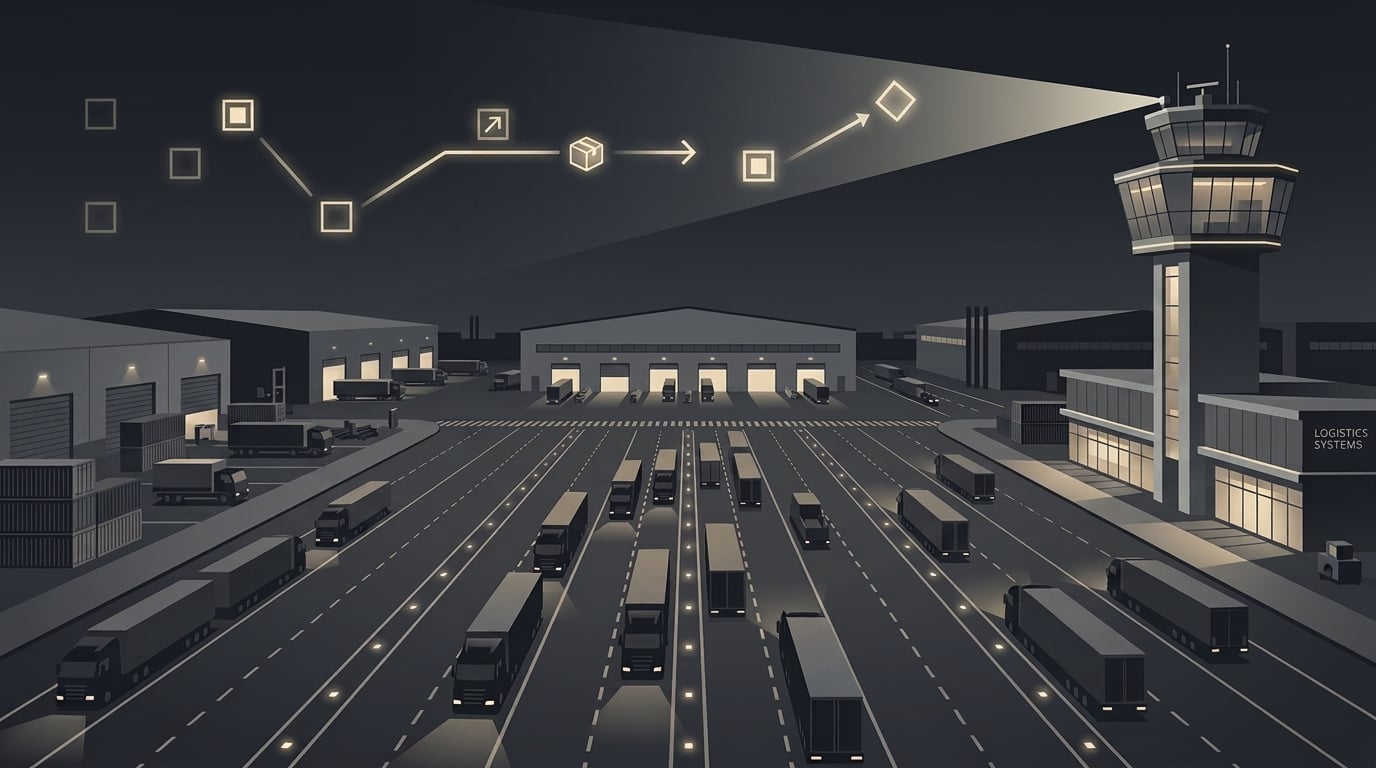
No industry lives in email like freight does. Quotes, tenders, PODs, exceptions, check calls, detention disputes: a mid-size brokerage moves thousands of messages a day, and the industry has adopted queue tooling to keep up. Front is common here, aimed at faster quotes, cleaner routing, and fewer dropped exceptions. If your ops inbox is chaos, that class of tool addresses the chaos, and we say that as a company that competes with it. What it does not address is the relationship behind the freight, which is the rest of this article.
But there is a blind spot in the whole category, and in freight it is expensive: everything these tools measure begins when an email arrives. The most costly event in a brokerage's quarter is an email that stops arriving.
The lane you lose without a single complaint
A top-ten shipper sends RFQs every week for two years. Then it is three weeks since the last one. No complaint, no breakup email, nothing to route or resolve. The volume is high enough that nobody's gut notices one customer's absence, and every dashboard stays green because dashboards measure response to inbound. By the time someone senses it, the freight is moving on a competitor's trucks, and win-back pricing is a far worse conversation than the check-in call that never happened.
High-volume industries are where relationship silence hides best, because the noise of the queue drowns out the absence of any single voice. Freight has both properties at maximum: enormous volume, and revenue concentrated in named accounts whose loyalty is rented by the week.
Two different jobs wearing one inbox
A brokerage inbox is really two workloads braided together. The ops workload is ticket-shaped: quotes, track-and-trace, exceptions, paperwork. Queue tools cover that one. The commercial workload is relationship-shaped: the fifty shippers and carriers whose names your P&L is made of, each with commitments, rate conversations, history, and a normal rhythm. Running the second workload on tools built for the first is how the quiet shipper stays invisible: the ops layer resolves each thread perfectly and retains nothing about the account behind it.
What relationship memory looks like for freight
Sektra syncs with the team's Gmail and works the commercial layer. For each named account it maintains the running state of the relationship: what was promised on rates and when to revisit, which questions from the shipper never got answered, who the real decision-maker is across the threads, and what that account's normal cadence looks like, including whether the relationship is warming up or cooling down. When a weekly RFQ sender goes three weeks dark, it is flagged with the context attached, not buried in a volume report.
Because the memory is built by reading existing Gmail history, it also survives the industry's brutal turnover: when a rep leaves and their book gets redistributed, the new rep opens each account already knowing the story, and can ask the AI Copilot any question about the account instead of reconstructing it from old threads. That single property, in an industry where reps carry relationships in their heads and phones, changes what a departure costs. More on how that record is assembled is on the product page.
A simple test for your own book
- List your top twenty accounts by revenue.
- For each, write down the date of the last inbound that was not operational noise: a real quote request, a rate conversation, a new lane discussion.
- Compare against what that account's normal used to be.
- Count the surprises. In our experience running this with brokerages, there are always surprises, and the median team finds two or three accounts already deep into a silence nobody had clocked.
Keep the ops tooling for the ops job. Just stop assuming a well-run queue means well-kept relationships. The queue only knows about the emails that came. Your margin lives in the ones that stopped coming.