Every client-facing team already runs on relationship memory. It is the reason you ask Priya before calling a long-standing client. Priya knows they went cold after the March invoice and warmed up again when the new CFO arrived, and she knows not to open with pricing.
None of that is written down anywhere. It is not in the CRM, it is not in a ticket, and it is not in any document that survives her notice period. It lives inside Priya and leaves with her.
So the term is naming something every team already has, depends on completely, and has never been able to keep. This article is an attempt to define it properly. We use the phrase constantly, and a phrase used constantly without a definition eventually means nothing at all.
What is relationship memory?
Relationship memory is a continuously maintained record of the state of each client relationship. It is derived automatically from the communication that already happens, with nothing entered by hand. It answers a specific set of questions about a named account at any moment.
What has been promised in both directions, and what is now due. Which questions are still waiting on an answer. What has already been tried and decided over the life of the relationship. Who matters on the other side. And whether the other side has gone quiet for longer than they should.
Two words in that definition carry the weight. Derived means nobody logs anything. A record that depends on humans transcribing work they already did will always lose to actual client work in a busy week. State means it describes where a relationship currently stands rather than archiving what once happened to it.
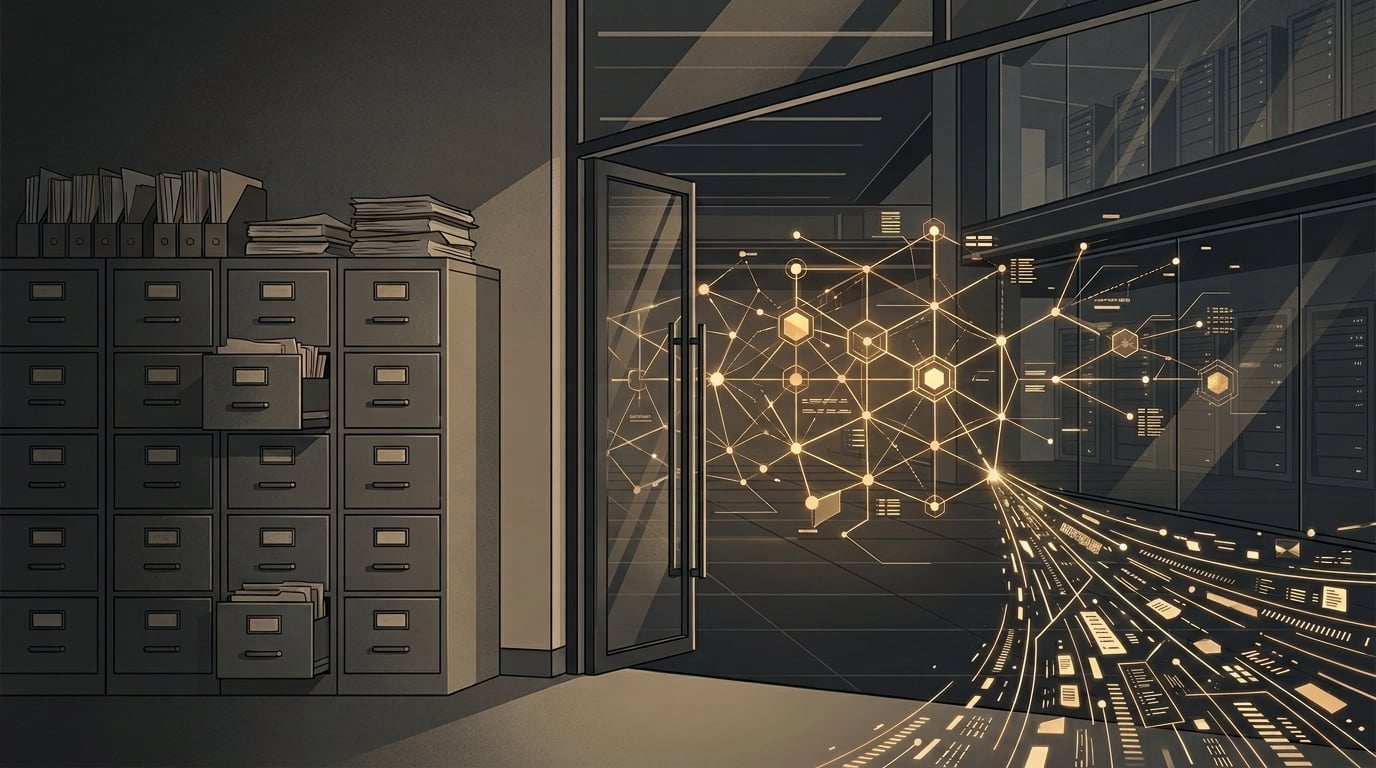
An archive is what you have already. A search box over fourteen months of threads is an archive. Its defining weakness is that retrieving anything from it requires already knowing the thing exists.
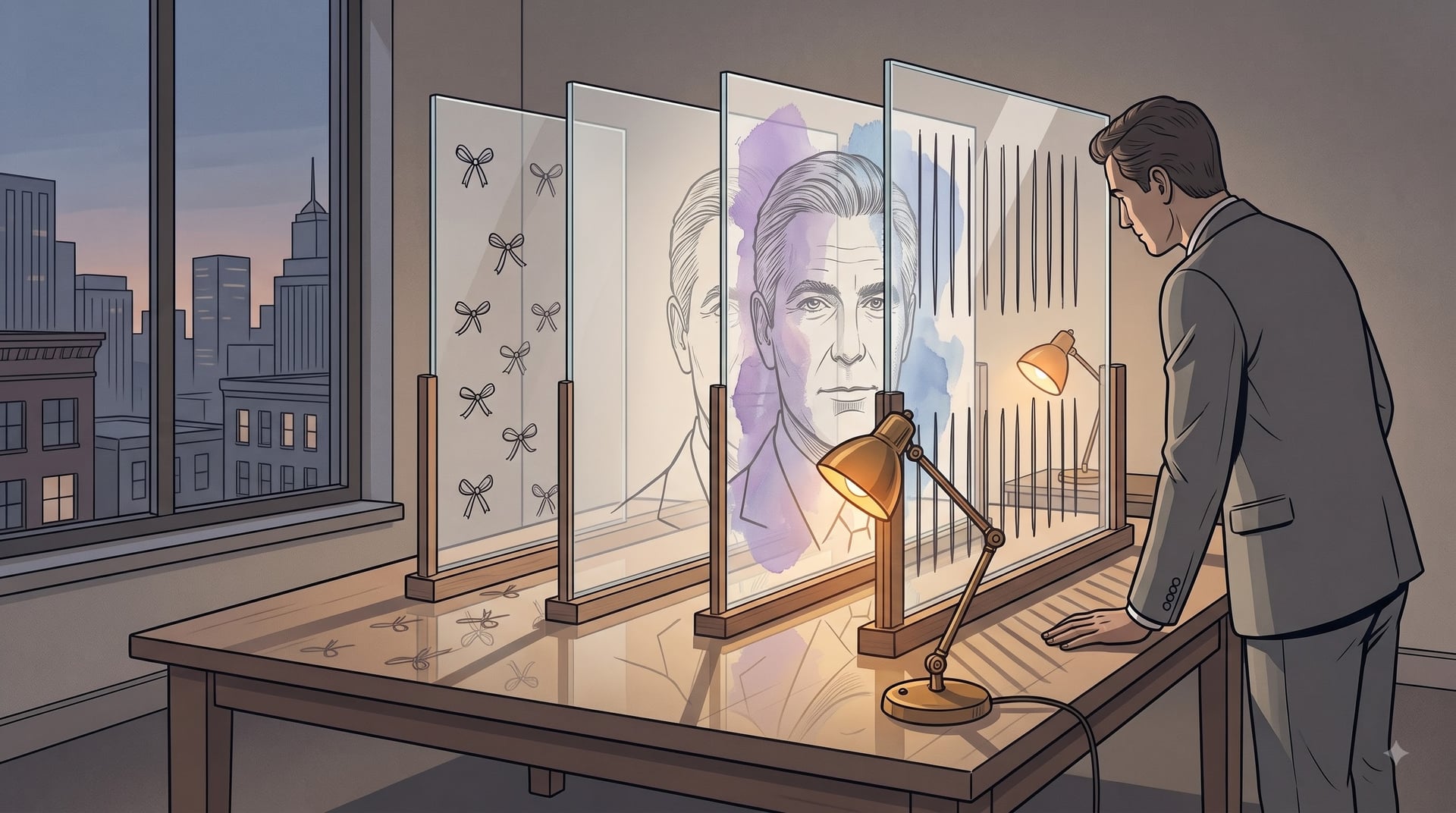
The four layers, in increasing order of invisibility
- Open loops. Commitments made in either direction and questions still unanswered. The most operationally urgent layer, and the only one most teams try to track, usually in a task manager, which faithfully holds whatever made it that far.
- History. What was proposed, rejected, renegotiated, escalated, forgiven. The layer that makes a new person sound like they have been here for years, and the one that is technically present in the archive but never practically available.
- Texture. Who the real decision-maker is versus who is on the thread, what this client is sensitive about, the difference between their cheerful fine and their cold one. The layer everyone assumes is unwritable, which is roughly what people said about the other three.
- Rhythm. Whether a relationship has gone quiet for longer than it should. The most invisible layer, because nothing arrives to announce it. Sektra covers it two ways. A watch you set on a client alerts you the day a quiet threshold passes. A section of the morning digest lists threads where the other side has owed a reply for three or more days.
Notice that the layers get more valuable as they get less visible. Notice too that the standard stack holds pieces of the first layer and none of the other three. That is not a weakness in those tools. Each one was built around a different unit (the deal, the ticket, the meeting), and the relationship was never the thing being modeled.
Three things relationship memory is not
It is not a CRM
A CRM stores what somebody typed into a field, which suits structured, decision-shaped data. Deal stages, close dates, contract values and forecasts are things a human should assert, because they represent judgments rather than facts sitting in a mailbox. A pipeline is a set of those judgments, and an email-derived record is not built to replace it.
Relationship state is a different kind of data, and the distinction that matters is entered versus derived. Deal stages benefit from being asserted. The running texture of a relationship does not. Entering it means summarizing, from memory, correspondence that already exists in full, and that summary competes for time with the client work that generated it.
Relationship memory is read from the mail directly. That is why it stays current without anyone's discipline, and why it is complete for relationships that started long before the tool arrived. Keep the CRM for pipeline, which is the job it was built for. The part to derive instead is the relationship diary.
It is not a shared inbox
A shared inbox coordinates the present tense. Who is handling this, has anyone replied, is someone else already typing. Sektra ships one, and the tools in this category are built around that job. The inbox and the memory solve different problems, and treating them as one thing is why the category confuses people.
The difference shows up in what triggers each tool. Every feature in a shared inbox is triggered by a message arriving. Assignment, routing, SLA timers, unread counts and collision detection all respond to inbound, which is the correct design for coordinating work that has shown up.
The most expensive event in a book of client relationships is a message that stops arriving, and inbound-triggered software has nothing to react to there. Nothing turns red. No counter moves. Absence is not an event, so noticing it requires a system that watches for it rather than a queue.
It is not a notetaker
Meeting recorders produce a summary of each call. But a meeting is punctuation, and the relationship is the sentence. The call happens once a month.
The negotiation over the delayed deliverable, the question asked in paragraph three, the tone that cooled after the invoice dispute, the promise made in a taxi on a phone. All of that lives in the mail between the meetings. That is most of the relationship by volume and nearly all of it by consequence.
Transcripts also carry the archive property in miniature. Thirty recordings of calls with one client is thirty accurate documents, each covering one call. The synthesis across them, and across the hundreds of emails between them, is a separate job that nobody has asked the recorder to do.
Why this was not possible until recently
It is fair to ask why, if this is so obviously the missing layer, nobody shipped it a decade ago. The answer is that three of the four layers live in prose, and prose was unreadable by software until very recently.
A commitment does not arrive labeled as a commitment. It is a clause in the middle of a paragraph about something else, phrased a hundred different ways. Sometimes it is conditional, sometimes a joke that both parties understood as binding. Extracting that reliably was not an engineering problem anyone could solve with rules and keywords, and people tried for years.
The rhythm layer is different. It was always computable, since timestamps have sat in every mailbox from the start. It went unbuilt because the industry measured what was easy. Response time falls out of two timestamps and became the scoreboard for the whole category. Noticing that a client has stopped writing required somebody to decide the relationship was the unit to watch. That is a choice about what to count, not a technical limitation.
How to tell whether your team needs it
- Someone on your team is the only person who understands a major account, and everyone knows who that person is for each account.
- Your answer to where do we stand with a specific client is to go and ask a colleague rather than open a system.
- A client has asked you something you had already been told, and you had to reconstruct the answer from threads.
- You have lost an account that nobody was worried about, and the post-mortem found no single incident to point at.
- A departure or a leave in the last year cost you real ground on accounts that were fine the month before.
Three or more of those and the memory is running on people rather than on anything structural. That works right up until the moment it does not. It fails in the least convenient way available, on the accounts that mattered, in a quarter when everyone was busy.
What this looks like built
Sektra is our attempt at the four layers. This is how each one is produced. Open loops come from reading the prose. Commitments are extracted as they are written, in both directions, including the ones phrased as a passing courtesy at the end of a longer message. Open questions are tracked separately from open threads. That is how a question buried inside a thread that already received a reply stops aging invisibly.
History and texture come from reading backward through the Gmail you already have. The record is populated on connection rather than starting empty and filling up over the following year. Silence is handled by watches you set per client and by the digest's list of threads waiting on the other side. That turns three weeks of quiet from an ambiguous fact into an alert on the day you said it mattered.
Two design decisions matter more than the feature list. The record is derived, so nobody logs anything and it cannot fall behind the work. And it belongs to the team rather than to a person. When someone leaves, goes on leave, or is out during a client's critical week, the relationship does not go with them.
The product page shows the record assembled, and the assistant answers the question you did not know to search for. It speaks in the voice of a colleague who has read every thread and forgets nothing.
Priya will leave eventually. Everyone does. The relationships should not have to leave with her.